A while back, talking with one of our Neorang members, we learned about a pretty interesting dating app.
It's called Raya.
Our member had actually been approved and was using Raya, and while we were chatting about various US dating apps, they told us all about it.
It was new to us at first, but the more we looked into it, the more interesting it got.
Unlike a typical dating app like Hinge, Bumble, or Tinder — where you download it, make a profile, and start using it right away — Raya runs as a private membership that requires an application and review before you can even get in.
It's also widely known as the dating app used by celebrities and creators.
So what exactly is Raya?
We looked into it further, alongside our member's actual experience using it.
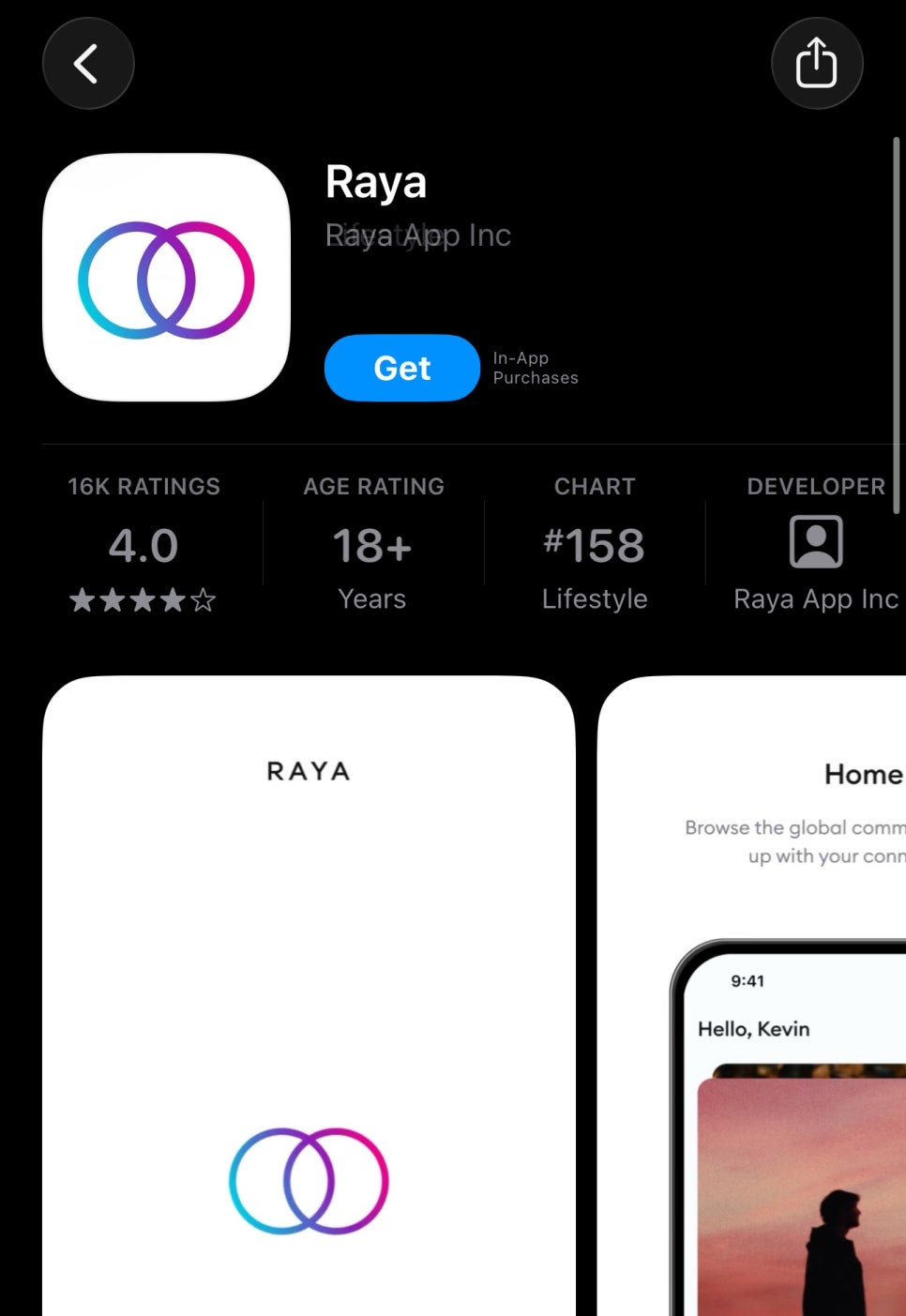
Raya: not just anyone can join
Raya's biggest defining feature is its application review.
Downloading the app doesn't mean you can immediately browse other people's profiles — you have to submit an application and get approved first.
Raya describes itself less as a dating app and more as a "Private Global Community."
Beyond dating, it also has a community element — meeting new friends and connecting with a range of different people.
It's become known for being used by actors, models, musicians, creators, and people in entertainment, which is how it picked up its reputation as a "celebrity dating app."
That doesn't mean only famous people can join, though.
Raya doesn't publicly disclose the specific criteria it uses to approve members.
There's a system where existing members can refer people, but a referral doesn't guarantee approval either.
Some applicants land on a waitlist instead of being approved right away, and some end up joining only after a fairly long wait.
So compared to a typical US dating app, it's a fundamentally different kind of service from the very start.
If it's hard to join, does that mean actual dates happen more easily?
This was actually the part we were most curious about.
If an app screens people even before they can join, it's natural to assume,
"Doesn't that mean matches — and actual dates — happen more often?"
But what our member, who actually uses Raya, told us was a bit different.
They said that while matches do happen on Raya, matches actually turning into real dates happens less often than you'd expect.
Of course, this is just one member's personal experience, so it can't be generalized to every Raya user.
Still, it was a pretty interesting point.
Even on an app that's hard to join and filled with a curated group of people, in the end,
matching and actually meeting someone are two completely different stages.
Sending a like because you like someone's profile is easy to do online.
But starting a conversation, keeping each other's interest, coordinating schedules, and actually setting up a date afterward — all of that still requires real effort from both people.
Still, here's what makes Raya interesting
None of this means Raya's approach is pointless.
What we actually found interesting was that Raya cares more about who joins the community than about simply growing the member count.
Most dating apps are built around the experience of signing up and then quickly swiping through countless profiles.
Raya adds a step before all of that.
"Who gets to be a member of this community?"
That's the part they manage first.
For members, there's a sense of exclusivity in knowing it's not a space just anyone can walk into.
That said, there's an interesting wrinkle here too.
Having a lot of great people in one place doesn't automatically mean more choice leads to a better match.
When you can keep browsing profiles and new people keep showing up, you can end up chasing the next option instead of focusing on the person in front of you.
That's less a Raya-specific issue and more something online dating services tend to share in general.
In the US, what happens after the match might be the harder part
Especially in the US, once you actually try dating, the part after matching turns out to be harder than expected.
Some areas, like New York and New Jersey, are relatively close-knit; others, like LA and Orange County, technically share a region but can still involve a serious commute.
Widen the scope to Atlanta, Dallas, Seattle, Chicago, or the Bay Area, and things get even more complicated.
On an app that covers the whole country, you might find someone you genuinely like who lives in a completely different state.
Factor in careers, school, and future living plans, and simply liking someone's profile isn't enough to turn it into an actual relationship.
This can feel even more pronounced for Koreans dating in the US.
Add the preference for someone who shares Korean culture or a similar upbringing, and the pool of realistic options shrinks even further.
In the end, what matters isn't "Korean" — it's "you"
Because seeing a good profile and meeting a good person are two different things.
Discovering Raya through our member was genuinely fun for us to look into.
The application-based approval process was interesting, and so was the way Raya has built an image as more of a private community than a plain dating app.
But listening to how it's actually used, one thing stuck with us more than anything else.
Seeing a lot of good profiles, and actually meeting a good person, turn out to be different problems.
At Neorang, we take this seriously too.
We don't stop at simply passing along a profile and checking whether both people like it — we look at whether both people genuinely want something serious, and if so, we help coordinate so it actually turns into a real date.
And since location and distance are real, practical factors in the US, we also weigh where someone lives, their day-to-day life, and how open they are to relocating.
Trying out a distinctive app like Raya can be a fun way to meet new people.
But if you've used several dating apps and keep wondering, "Why do I match with people but it never turns into an actual meeting?" — it might be worth trying a different approach to meeting someone.
If you're looking for something serious in the US,
connecting you not with a person in a profile, but a person you'll actually meet —
that's what Neorang, a Korean-American matchmaking service, is here to help figure out with you.