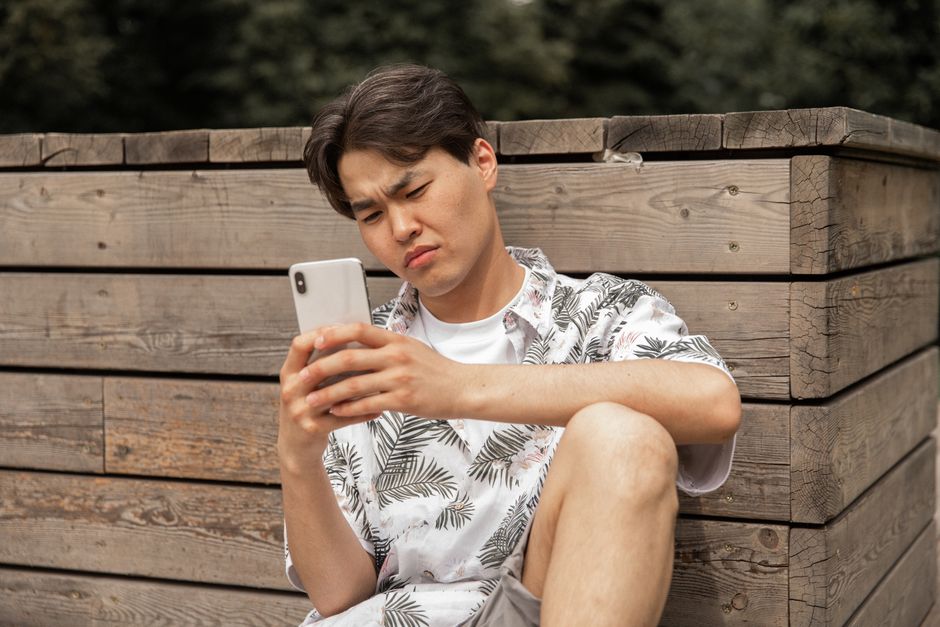
If you use dating apps in the US or watch dating content, you'll run into a lot of words you never learned in school.
Talking stage, exclusive, DTR, ghosting, situationship...
The English itself isn't hard, but finding an exact Korean translation is a bit tricky.
Two expressions that are especially useful for understanding today's dating culture are ghosting and situationship.
They mean completely different things, but both come up often when a relationship isn't clearly defined.
Talking well, then suddenly gone: ghosting
Ghosting means exactly what it sounds like: the other person disappears like a ghost. (Koreans often call it "jamsu," going underwater.)
You might message someone on a dating app for a few days, and then one day the replies just stop.
In more serious cases, you've actually been on a few dates, and contact ends with no explanation at all.
Instead of saying something like "I don't think we're a good fit," the person ends things by simply stopping all contact.
That said, a reply that's a few hours late or a day without texting isn't automatically ghosting.
The term is usually used when contact or a relationship that had been going on for a while is completely cut off without explanation.
Because conversations vanishing before an actual meeting is so common on dating apps, people also use "ghosted" casually. (It's happened to me plenty of times, haha ㅜ)
Feels like dating, but you're not together?
Situationship is a little harder to explain.
Two people see each other often. They go on dates on weekends and text frequently.
They like each other, and to the people around them, they sometimes look no different from a couple.
But if someone asks, "Are you two together?", it's hard to answer.
A relationship that feels like dating but has never been officially defined as a relationship is called a situationship.
It may feel similar to Korean "sseom," but it isn't necessarily the same.
Sseom is often seen as a fairly short stage before dating officially begins, while a situationship can go on for quite a long time.

Is a situationship always a bad thing?
Not necessarily.
If both people want the relationship as it is and share the same expectations, it may not be a problem.
Not every connection has to lead to marriage or a long-term relationship.
The problem is when two people want different things.
If one person assumes it will become an official relationship over time while the other has no intention of taking it further, conflict can follow.
So the bigger problem may not be the situationship itself, but continuing it without realizing your expectations are different.

New kinds of relationships that came with dating apps
Dating apps have dramatically changed how people meet.
You can easily meet a much wider range of people than before, and starting a conversation with someone new is easier too.
At the same time, the start and end of a relationship can become lighter. If a conversation isn't going well, opening the app shows you a steady stream of new profiles.
That's why new dating terms keep appearing: not just ghosting and situationship, but also talking stage, breadcrumbing, and more.
Of course, not all of this is the fault of dating apps. The same things can happen in relationships that started offline.
What should you do if you want something serious?
Asking someone about marriage plans right after meeting them can feel like a lot.
But you don't need to hide what kind of relationship you want, either.
You can mark Looking for a long-term relationship on your dating app profile or bring it up naturally in conversation.
This matters less as a way to filter people out and more as a way for both of you to avoid wasting time.
Some of the people who come to Neorang, a Korean matchmaking service in the US, are people who used dating apps extensively before looking for a different way to meet.
It's often not that they disliked the apps, but that they grew tired of having to figure out from scratch, every time, what the other person was looking for.
That's why Neorang confirms not only members' preferences but also what kind of relationship they want before making an introduction.
New dating terms like ghosting, situationship, and exclusive will keep coming.
But no matter how many words there are, what matters in the end doesn't seem to change much.
What kind of relationship do I want, and is the other person looking in the same direction?
If you're meeting someone new in the US, rather than guessing at the relationship from their behavior alone, talking openly about what you each think at some point may be the surest way forward.